



Black beans might be small, but their powerhouse ingredients can keep your gut healthy, improve your heart health and more…
Black beans might not be the ingredient you automatically think of when creating delicious cookies but I’ve been baking this Anna Jones recipe for years now, sometimes adding orange zest or black cherries, or staying with the pure double chocolate theme and I promise you – as well as making the house smell like heaven, no-one has ever guessed the main ingredient!
Packed full of Protein and Fibre
Eating any fibre rich foods has been shown to help lower high cholesterol levels as well as keeping us fuller for longer and black beans are packed full of both protein and fibre. They also contain quercetin, a plant polyphenol that naturally works as an anti-inflammatory nutrient, as well as potassium, calcium and magnesium – three minerals which have been proven to naturally decrease blood pressure.
There are so many more reasons to enjoy these brilliant cookies and for geeks like me some of the benefits of black beans, medjool dates and chocolate are detailed below the recipe.
But if you just want to enjoy the flavour, skip the science and just whip up a batch and enjoy, because healthy eating really can feel good…
Dark chocolate goodness cookies
- Ingredients:
- 2 tbsp chia seeds, or 2 free range eggs
- 125ml maple syrup (or to taste)
- tsp vanilla extract
- 400g can black beans
- 2 tbsp coconut oil
- 40g cocoa powder
- good pinch of flaky sea salt
- 75g dark chocolate (70%)
- 50g medjol dates
Here’s how:
- For dairy free option, mix chia seeds with 4 tbsp of cold water.
- Then mix chia seeds or eggs with maple syrup and vanilla.
- Drain and rinse black beans well, place in food processor with coconut oil, cocoa, salt and blend to smooth dough.
- Add maple syrup mix and pulse into wet dough.
- Transfer to bowl and stir through the chopped chocolate and dates.
- Spoon tablespoons of batter onto a lined backing sheet and sprinkle with salt.
- Bake at 210 degree Celsius (190 fan) for 12-15 minutes
- Taken from Anna Jones (2015) – A Modern Way to Cook.
Why are these yummy treats good for you?
Your gut health improves with black beans
Did you know there are here are different types of fibre? Black beans provide resistant starch, a dietary fibre that doesn’t break down when it moves through the digestive system. As your gut tries to break down that resistant starch, your gut microbiota create short-chain fatty acids – kickstarting the fermentation process and helping you achieve better gut health.
Chocolate is a staple on our house…
Not shop bought bars of sugar – the cacoa or high cocao solid type, darker the better- the type of chocolate where a small piece will be enough to see you through. The good news is dark chocolate is loaded with nutrients that can positively affect your health. Made from the seed of the cacao tree, it’s one of the best sources of antioxidants you’ll find.
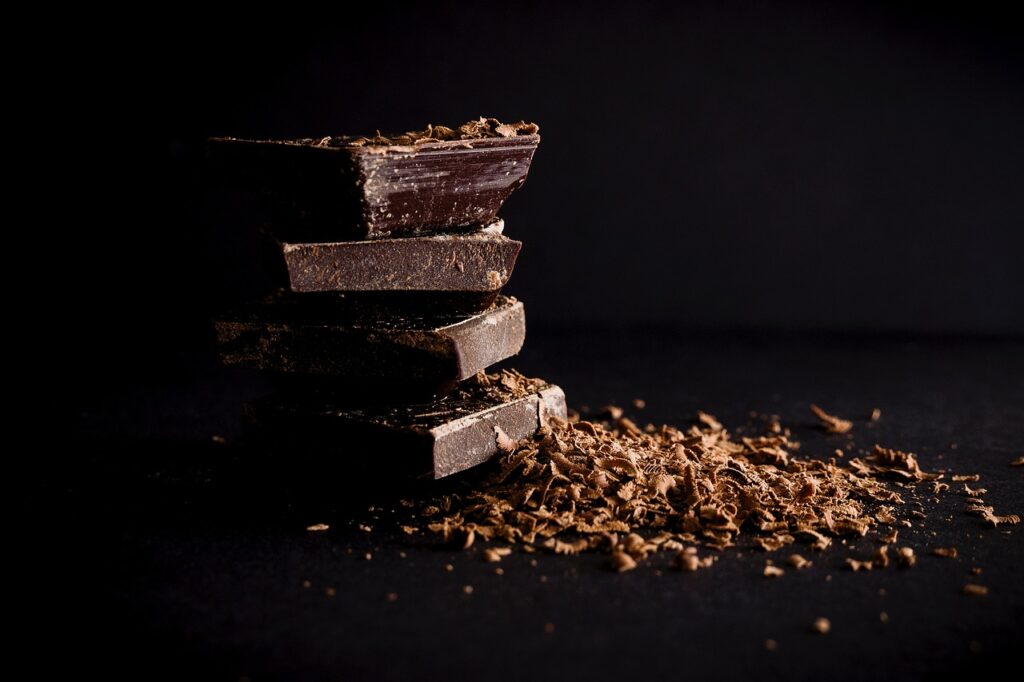
Cocoa vs. Cacao: What’s the Difference? Cocoa powder and cacao powder are similar in some respects, the main difference being that cocoa is processed at a much higher temperature (and often packaged cocoa contains added sugar and dairy).
Cacao powder is made from fermented beans that have not been roasted. They are processed at low temperatures and then milled into a powder. Giving it a slightly more bitter taste and a higher nutritional content. Cocoa powder on the other hand is made from beans that are both fermented and roasted and then processed at a much higher temperature. It’s less bitter but loses much of its nutritional value. I tend to go for the less processed variety where-ever powder is required.
Try to buy quality dark chocolate with a high cocoa content which is more nutritious, contains a decent amount of soluble fibre and is loaded with minerals like iron ; magnesium ; copper ; manganese in addition to plenty of potassium, phosphorous ; zinc and selenium,
Chocolate is Powerful source of antioxidants
Dark chocolate is loaded with organic compounds that are biologically active and function as antioxidants. Compounds like polyphenols, epicatechin, catechin, and oligomeric procyanidins help your body fight against free radicals, which may cause oxidative stress and increase the risk of developing diseases.
Eating good quality chocolate could improve brain function
Studies show that eating high flavanol cacoa/cocoa could help improve blood flow to the brain in young adults. This may explain why eating cacoa daily appears to improve attention, verbal learning, and memory.
Raises HDL and protects LDL from oxidation
Consuming dark chocolate may help improve several important risk factors for heart disease. It may protect against high cholesterol. Some forms of LDL cholesterol are more likely to oxidize, which happens if they react with free radicals in your body. Oxidation makes the LDL particle itself reactive and capable of damaging other tissues, such as the lining of the arteries in your heart. Cocoa may help lower oxidation-prone forms of LDL because it contains antioxidants that make it into the bloodstream and protect lipoproteins against oxidative damage.
Dark chocolate also contains theobromine and stilbenes, which may both help increase HDL “good” cholesterol.
The compounds in dark chocolate also appear to be highly protective against the oxidation of LDL which In the long term, may lead to less cholesterol lodging in the arteries, resulting in a lower risk of heart disease.
In fact, research shows a fairly drastic improvement. Over time, consuming flavanol-rich cocoa or dark chocolate can help improve cardiovascular health, lower blood pressure, and protect against conditions like heart disease.
Why your skin might love chocolate
The bioactive compounds in dark chocolate may also be great for your skin. A 2021 review suggests that the flavanols could help improve blood flow to the skin and increase skin density and hydration.
Medjool Dates
Native to Morocco, Medjool dates are one of the thousands of types of fruit grown from the date palm. Known as “the fruit of kings,” these chewy dates taste sweet, like caramel. Originally eaten by royalty, Medjool dates were thought to ward off fatigue.
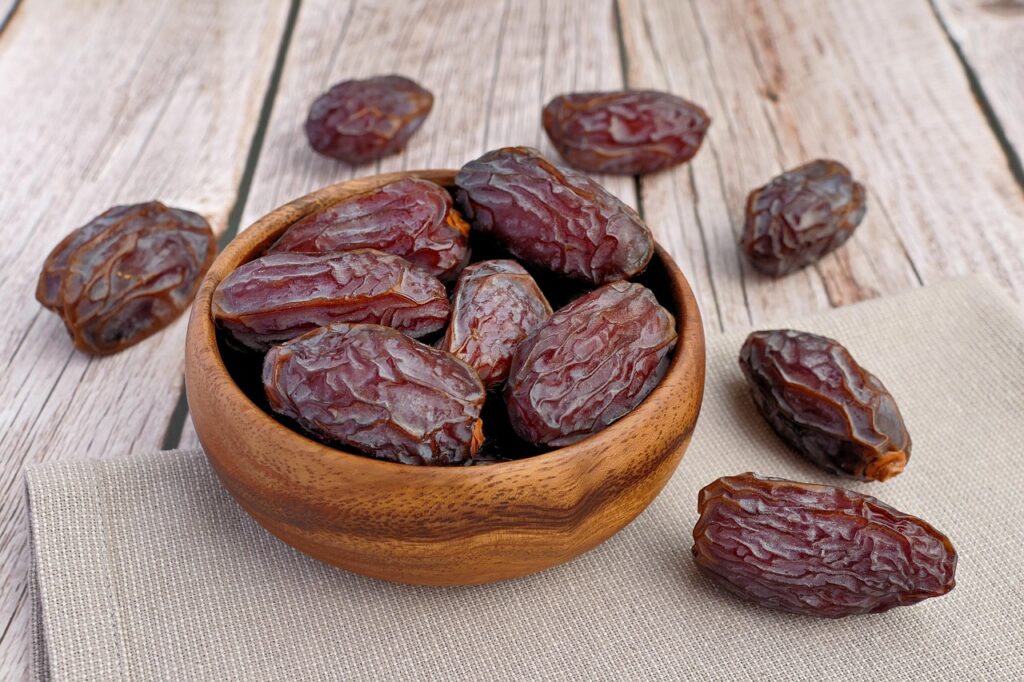
Adding a few Medjool dates to your diet may not affect your blood sugar much because they have a low glycemic index which makes dates great to snack on and a good substitute for sugary snacks.
These ancient energy-boosting fruits contain high amounts of vitamins and nutrients making them more like a really tasty multivitamin. Loaded with tons of micronutrients,a 3.5-ounce serving of Medjool dates gives you : 20% of the RDI for potassium ; 18% of the RDI for copper ; 15% of the RDI for manganese and 12% of the RDI for vitamin B6.
These vitamins and minerals serve all sorts of key functions in the body. Potassium regulates muscle and nerve function and has been linked to better heart health. Getting too little of it each day may increase your risk of cardiovascular disease. Copper, manganese, and vitamin B6 are involved in keeping a healthy immune system and help support your skeletal structure. Low levels of copper have been associated with lower bone mineral density. Similarly, manganese is a co-factor for multiple enzymes involved in bone formation,
High in antioxidants
Though invisible to the naked eye, phenolic compounds like flavonoids, polyphenols, procyanidins, and sinapic acid all lie within each wrinkly fruit. In fact, one study found that, among dried fruits, dates had the highest concentration of polyphenols.
Why are antioxidants so important? Including them in your diet each day could reap big anti-inflammatory benefits. Antioxidants dial down inflammation in the cells and may be useful for combating conditions like cancer and auto-immune diseases.
High in insoluble fibre – it’s technically indigestible—meaning that it as it passes through the GI tract moving food and waste through the body more quickly and increasing the health of your gut microbiome.
A short note on maple syrup
Compared to refined sugar, maple syrup may be a better choice as a sweetener. Although pure maple syrup is high in sugar, it also contains various minerals, including manganese, zinc, calcium, and potassium. It also has over 50 bioactive compounds, which could offer antioxidant and anti-inflammatory properties. For example, quebecol, a polyphenol from the maple tree sap.
If you are watching your sugar intake, maple syrup also has a slightly better glycaemic profile than many other sugars, which means that it has slightly less impact on blood sugar levels when consumed.
Despite its sugar content, maple syrup has been found to contain inulin, a dietary fibre that has been linked to a healthy digestive system and microbiome.
Again what we are looking at here is health and balance.
Geek or not I hope you enjoy making and eating these delicious treats x


