“Change your posture and you change the way you breathe. Change your breathing and you change your nervous system. This is one of the great lessons of yoga: Everything is connected…” ~Timothy McCall, M.D.

We know Yoga can help us maintain strength, flexibility and health and many of us come to yoga for just those reasons, but there’s also a lot of ‘stuff’ spoken about how Yoga can make you happier, calmer, more spiritual – there are all kinds of claims and sometimes they are overwhelming. Ever sat in a class and noticed that one student who just exudes calmness and serenity and thought – bugger, why cant I stop my mind thinking about that meeting tomorrow; the mound of ironing; whether I actually have time to be here? Its fine – that student has good AND bad days too! Being able to let go comes with practice and every day is different. The truth, is we all take from our Yoga practice what we need on any given day – and whatever that is for you today, its exactly right for you.
For some of us practice is often a reminder of our deep spiritual awareness – a connection to the Universe (thats spiritual rather than religious), for others its just having a little space to breathe and let go and for some its just a question of keeping supple. None of these are wrong – they are in fact quite similar. Whether we practice purely for physical health or for something deeper, when we make time in our busy lives to step back, get in touch with our body and focus our mind, a strange thing happens. The act of nurturing ourselves – and that’s what it is – allows us to find a perspective that perhaps eludes us at other times.
Why does Yoga work? The answer you get depends on who you talk to. A doctor may give you the physiological reasons, a psychologist – the psychological reasons and as a yoga teacher I would say the reasons are physical, mental, emotional and spiritual. We begin with the physical work first, becoming aware of our breath and our body and we begin to notice how breath and posture effect our physical form; at this point the chances are you’ll start to notice the effect these things have on your mind; you may begin to look deeper at your way of thinking, perhaps seeing things from a different perspective and even beginning to see patterns of behaviour that no longer serve you. As these changes take place you might be surprised to see them effect you both on and off the mat. It doesn’t mean that life no longer presents challenges, simply that our reactions to potentially stressful situations changes. We start to learn how to let go, our minds become less fearful and our bodies react accordingly.
As we have said, much is spoken about the physical effects of yoga, this excerpt from the Counseling & Psychological Services University of California, is an easy access piece that simply outlines how yoga begins to effect our mind, its not deeply spiritual its just an interesting place to start:
”Yoga is an holistic practice which emphasises mind-body connectedness and involves postures, breathing, and meditation. It is receiving growing recognition by Western science and health professionals as a powerful tool for promoting mental and physical well-being. Essentially, yoga is a preventative and cost-effective approach to overall well-being.
Yoga is not a religion. Although yoga does interweaves philosophies such as Hinduism or Buddhism, it is not necessary to practice those philosophies in order to practice yoga. It is also not necessary to surrender your own religious beliefs to practice yoga. By now, it’s no secret that the regular practice of yoga results in many physical benefits such as improved flexibility, strength, and posture. However, the many psychological benefits of yoga are often overlooked. Psychological benefits of a regular yoga practice include:
• Stress reduction
• Increased self-awareness
• Less anxiety and depression
• Improved concentration
• Inner peace and calm
• More positive view of self/others
• Increased body awareness and acceptance
• Increased energy and vitality
• Heightened sense of control of one’s body and mind
• Decline in self-destructive patterns
• Improved self-confidence
• Increased mental clarity
• Improved reaction time
• Improved learning ability and memory
• Increased ability to be present in the moment
• Greater creativity
• Improved sleep
• Increased emotional stability
While there are many forms of yoga, the most popular forms involve “the three basics of yoga” : postures (called “asanas” in Sanskrit), breathing techniques (Pranayama), and meditation/relaxation. In yoga, the body is viewed as the outer manifestation of the mind, and the mind can be influenced by altering body posture. The way we carry ourselves influences the way we feel. If a person walks around with his chest collapsed, head down, eyes half open, it likely
impossible for this person to feel good about himself.
Your perspective on your body, your thoughts, and your whole sense of self can change when you adopt different postures. Yoga postures strengthen, purify, and balance the endocrine, nervous, and circulatory systems. For example, inverted postures are useful for altering blood flow. Increased blood flow to the brain results in
increased availability of oxygen and glucose. This leads to increased production of certain neurotransmitters, which in turn enhances one’s mood and state of well-being.
Yoga postures are a form of meditation in motion, calming the mind and cultivating a state of relaxed but alert concentration. The postures help to release built-up tension and emotional stress, which burrow into the muscles of the body. As the body relaxes, the breath naturally becomes balanced. When the breath comes into balance, the mind relaxes and becomes quiet.
Shallow breathing can create a state of arousal in the sympathetic nervous system, which can lead to anxiety, panic, and fear. Yoga breathing exercises decrease arousal, which in turn calms and focuses the mind, relaxes the body, oxygenates the blood, soothes anxiety and stress, and promotes clear thinking. The intense concentration and body control involved in breathing exercises help free the mind from mental distractions, worries, and fatigue.
Meditation is a type of inward concentration that allows you to focus on your senses, step back from your thoughts and feelings, and perceive each moment as a unique event. It helps us to develop greater calmness, clarity, and insight in facing and embracing life experiences. Two types of meditation techniques:
• Concentrative meditation uses a word (mantra), object (e.g., candle flame) or a sensation (e.g., breathing) to focus the mind. If your mind begins to drift, you refocus your attention on the word, object, or sensation.
• Mindfulness meditation involves allowing your thoughts, feelings, and images to float through your mind without reacting. In mindfulness, you are simply observing the thoughts and feelings in a detached perspective as “mental events” rather than as aspects of yourself or as necessarily accurate reflections of reality. Through practice, you become more skilled at stepping back and observing without reacting. Mindfulness meditation helps to cultivate a non-judging self acceptance, and helps us to recognise that we are not defined by our emotions.
Research
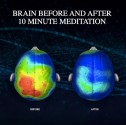
Studies by Richard Davidson, PhD at the University of Wisconsin have found that the prefrontal cortex shows heightened activity in meditators, a finding that has been correlated with greater levels of happiness and better immune function.
•A 2001 study in the Indian Journal of Physiology and Pharmacology showed that participants who practised yoga consistently for 10 months were less anxious an
d depressed both during and after their months of yoga practice.
• By improving circulation in the endocrine glands, a consistent yoga practice enhances the functions of hormones that play a primary role in the physiology of depression. This results in a reduction in depression and improved overall mood.
• Controlled studies have demonstrated the beneficial effects of yoga on anxiety states. Regular yoga practice improves functioning of the parasympathetic nervous system that activates the relaxation response.
• Scandinavian researchers measured brain waves before and after a two-hour yoga class and found that alpha waves (relaxation) and theta waves (unconscious memory, dreams, emotions) increased significantly. These results indicate that the brain is deeply relaxed after yoga and that participants have better awareness of their su
bconscious and emotions.