


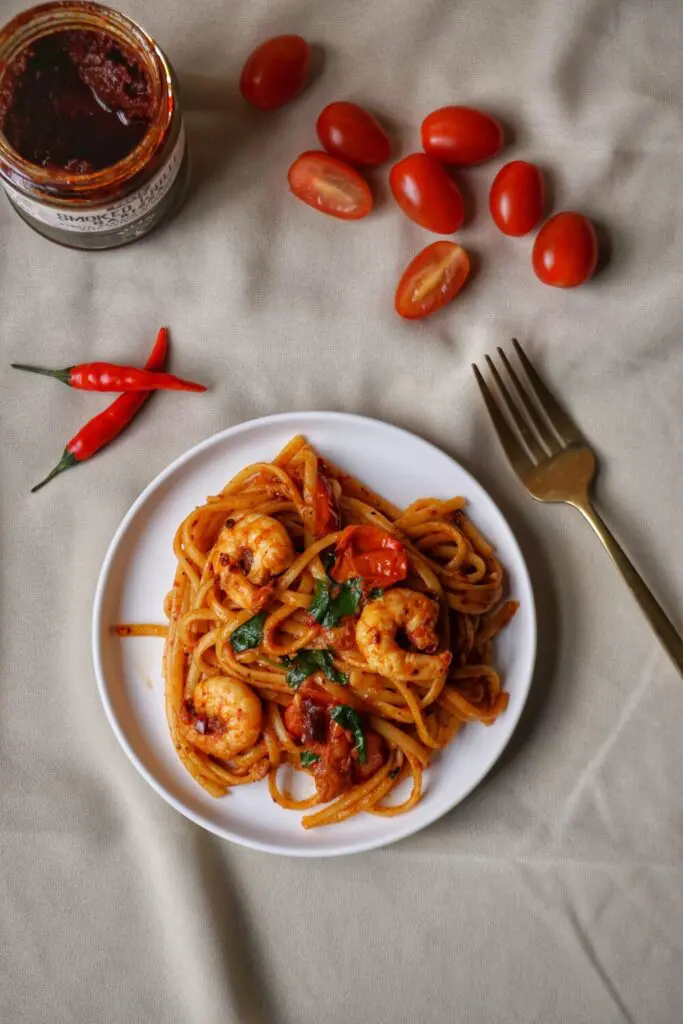
Harissa Prawn Pasta Recipe (check out the veggie options in the ingredients list)
Thanks to the brilliant people at ETFoodvoyage for this amazingly speedy and tasty midweek supper. This harissa prawn pasta offers a unique kick of flavours to the palate and a punch of spice to set your tastebuds tingling. You can knock it up in under 20 minutes but the taste is compromise free!
What is harissa?
A hot, aromatic paste made from chilli and assorted spices and herbs harissa is spicy and fragrant. It’s widely used in North African and Middle Eastern cuisines as a condiment, or mixed with water or tomato juice to flavour stews, soups or couscous. Typically appearing in Tunisian and Libyan cuisines -imagine roasted peppers, but with plenty of spices added to round off the flavour.
Ingredients
- 220 g Pasta (Linguine/Spaghetti or choose a wholemeal, corn or rice pasta)
- 150 g Prawns (if you are using frozen prawns let them defrost and drain them before cooking or go veggie by frying off small cubes of haloumi or tofu till they turn golden then adding in to the sauce before serving. This creates a better texture and a crisp exterior that holds its shape and soaks up sauce, preventing it from getting mushy,)
- 3 cloves Garlic finely chopped
- 2-3 Red Bird’s Eye Chillies finely chopped
- 200 g Cherry Tomatoes halved
- 2 heaped tbsp Harissa Paste (the original recipe calls for 2 tbsp but I always add 3)
- 10 g Fresh Coriander Leaves chopped
- 2 tbsp Olive Oil
- ½ tsp Oregano
- ½ tsp Salt
- ½ tsp Black Pepper
Instructions
Bring a large pot of water to boil, season generously with salt. Cook pasta according to package instructions.
In the meantime, heat olive oil in a large pan over medium heat, saute garlic and red chillies for 1-2 minutes until fragrant.
Add in the cherry tomatoes, cook until they begin to blister, roughly 5 minutes. Season with salt, black pepper, and oregano.
Stir in Harissa paste, saute for a minute. Then add in prawns. Cook for about 5 minutes (depending on size) until cooked through.
Add 1-2 tbsp of pasta water to loosen up the sauce and add in cooked pasta. Toss to combine.(here’s where you add the tofu or haloumi if you are using)
Mix in fresh coriander leaves and serve immediately.
Notes
- Different brands of offer different blends of flavour, so do play around until you find your best pick of harissa paste. I use Belazu Chilli Harissa.
- Adjust the amount of chillies accordingly to the spice level of your harissa paste and your taste preferences.
Why Eating Chillies Can Be Good for Your Health
Did you know that chillies have a range of health benefits, from boosting your immunity to increasing your metabolism?
Belonging to the Capsicum genus, one of the health benefits of eating chillies is that they can improve your cardiovascular health. Chillies contain capsaicin, a compound that helps reduce your risk of heart disease and stroke by lowering your blood pressure and cholesterol levels.
Chillies are a great source of vitamins, minerals, and fibre. In fact, chillies are considered to be a high source of vitamins A and C. These nutrients can help your body fight off infections and free radical damage as well as being an excellent source of potassium, which helps regulate blood pressure.
The capsaicin in chilli peppers helps your body absorb other nutrients in food more effectively. So if you’re looking to boost your nutritional intake by eating chillies, consider pairing them with foods rich in the nutrients and vitamins that chillies also contain.
Carbs aren’t bad!
Pasta is one of those foods that’s universally loved but often maligned because of its carbs. Plus, traditional pasta is made from refined grains. Yet, pasta can be included in a healthy diet. Case in point: Pasta is a staple of the Mediterranean diet, which experts consider one of the healthiest ways to eat.
More evidence comes from a 2020 study examining associations between pasta eaters and avoiders. The study found that pasta eaters had better diet quality with higher daily intakes of folate, iron, magnesium and fibre compared to non-eaters. Pasta eaters also had lower intakes of saturated fat and added sugars, substances we should be limiting, relative to those who didn’t eat pasta.
The takeaway here according to Samantha Cassety is that pasta isn’t the enemy. It’s how we eat it that matters. This is a good reminder that pasta can absolutely be part of a healthy, balanced diet, especially when you’re pairing it with fibre-rich, whole food ingredients rather than drowning it in heavy cream sauces or piling multiple portions on a plate without balancing your pasta out with other nutrients.
With so many pasta options available, there’s something suitable for just about any need or goal. Nutrient content varies depending on the variety of pasta you choose – some will provide an excellent source of fibre while others may be rich in protein, and some provide a boost of both nutrients while veggie noodles have fewer calories and carbs than grain or pulse-based pastas, and they may have additional vitamins and minerals.
Pasta is a nutritious and delicious part of a balanced diet. It has vital nutrients, is a great source of energy, and has a low glycemic index.
Though many people understand the nutrient content and energy benefits of pasta, often times there is some confusion around pasta and the glycemic index – the measurement of how fast a carbohydrate-containing food causes blood sugar levels to rise. The higher the number, the faster the sugar rises.
Carbohydrate foods that are considered low GI, having a level of 55 or lower, break down slowly, take longer for you to digest, and cause only a gradual rise in blood sugar. So where does pasta fit in? Pasta has a glycemic index of approximately 50 to 55, which is considered low.
Pasta is made from grain, one of the basic food groups in a healthy diet. It’s a good source of energy, iron and B vitamins and can give you fibre, too, if it’s made from whole grain. According to Eatwell Guide starchy foods – such as pasta, rice or cereals – should make up just over a third of the food we eat,
Wholewheat or wholegrain are healthier than ordinary pasta, as they contain more fibre which we digest more slowly than refined grains, so they can help us feel full for longer.
Pasta has gotten a bad rap because of its carbohydrates, but research shows that carbs don’t keep you from losing weight – as long as you don’t overdo it. In fact, in one study, people who ate pasta as part of a Mediterranean diet had a lower body mass index (BMI) – a measure of your body fat based on your height and weight – than those who didn’t.
Whilst many of us think of starchy foods as fattening the truth is that gram for gram they contain fewer than half the calories of fat.
Demand has seen a new category of pastas made from corn, rice, and even quinoa. So you can make a pasta dish which is gluten-free or vegan and still enjoy all the flavour you want.

